
The 1996 Seattle Mariners, Part 2
The Mariners begin the season with a month of home run records, influenza, pitching changes, broken hotel windows, and the best April in franchise history.
It’s been awhile, but I am back with more 1996 Mariners! I’ve got April for you today, May tomorrow, and June by next week or the week after. If you missed Part 1, or would like to catch up, you can find it here:
 Amanda Lane Cumming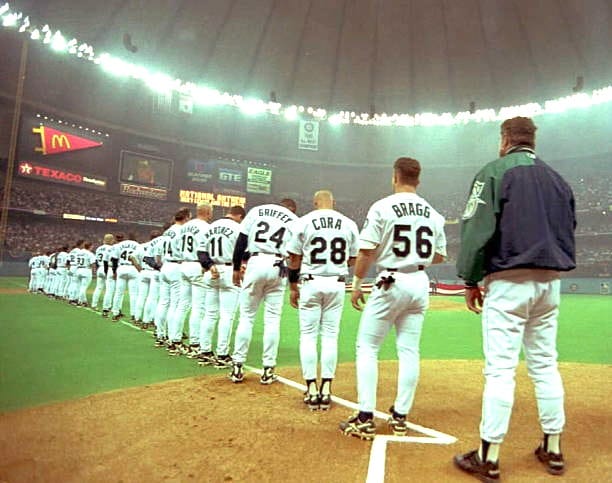
The Mariners and White Sox opened the 1996 major league season on a Sunday night, the only teams in action. Most of the rest of MLB opened the next day.
Two games were rained out and one was postponed because of snow, but the traditional National League opener in Cincinnati was suspended when, seven pitches into the game, home plate umpire John McSherry signaled to the umpires on the field. He turned and walked back toward the umpires tunnel, where he collapsed face down on the warning track, and died of a massive heart attack. The Reds and Montreal Expos players were understandably shaken, and supported the umpires in the decision to suspend the game, against the wishes of Reds owner Marge Schott.
Despite the shocking suspension in Cincinnati, games went on elsewhere. After all, it was Opening Day of the first full major league season since 1993, with the 1994 and 1995 seasons losing games due to the labor disagreement that culminated in the players strike. Major league owners and pundits worried openly about attracting fans, who were still upset about the strike, back to the ballpark.
In the Northwest, however, those fears were hard to find. The Mariners were coming off the magical 1995 season, a new ballpark was in the works, and everyone was excited to see what they would do next.
It felt like the time was now for the Mariners and they were eager to get to it.
April 2 - Mariners 3, Chicago 2
Sterling Hitchcock made his first start for the Mariners, going seven innings, allowing only a two-run home run to Ray Durham. Luis Sojo drove in all the Mariners’ runs with a hit down the third base line with the bases loaded in the bottom of the third inning
Cecil Fielder of the Tigers stole his first base in 1,097 career games, the longest streak in MLB history without a stolen base.
April 3 - Chicago 4, Mariners 2
Tony Phillips led off the game with a home run off Bob Wolcott and the Mariners dropped the third game of the series, and the season, to the White Sox.
The Unabomber, Ted Kaczynski, was arrested in Montana after almost 20 years of attacks.
April 5 - Milwaukee 10, Mariners 6
Edwin Hurtado started and struggled, and the Mariners couldn’t catch up. Ken Griffey Jr. and Jay Buhner hit their first home runs of the season. The team tried to mount a comeback in the bottom of the ninth, and Dan Wilson hit a bases-loaded double, but it wasn’t enough.
April 6 - Mariners 8, Milwaukee 5
Randy Johnson earned the 100th win of his career. Paul Sorrento contributed two home runs, one a grand slam followed by a Russ Davis solo shot.
“Champagne Supernova” by Oasis knocked “Ironic” by Alanis Morisette out of the #1 spot on the Billboard Modern Rock chart.
April 7 - Mariners 3, Milwaukee 1
Sterling Hitchcock went eight innings, not allowing a hit until the fifth. Norm Charlton allowed the only run of the game in the ninth inning. Edgar Martinez contributed an RBI double in the first inning and Paul Sorrento drove in a run in the eighth.
Primal Fear moved into number 1 at the box office, unseating The Birdcage.
Though the Mariners started the season strong with a 4-and-2 homestand, the local media was quick to point out trouble. In the first series against Chicago, and what can be laughingly dismissed as a small sample size, the heart of the Mariners order—Ken Griffey Jr., Jay Buhner, and Edgar Martinez—combined for only five hits and no home runs. As a team the Mariners were batting .190 and had stranded 30 runners.
Manager Lou Piniella opted to look on the positive side. “This whole homestand, we didn’t hit much but we had timely hitting. Look at the scores around baseball - a lot of high score games - and we won, what, three games without scoring four runs? Good pitching and defense will let you do that.”1
Paul Sorrento came to the Mariners over the offseason hoping to get the opportunity to play every day. But in the second game, manager Lou Piniella opted to start Edgar Martinez over Sorrento versus a left-handed pitcher. Though Edgar had largely left fielding behind to become a full-time designated hitter, he did make the occasional start as a regular player. In 1996 he’d start four games at first base and one at third base. He’d also fill in at third once. But Edgar was not good defensively, and whatever the Mariners felt they could gain by sitting Sorrento against lefties, they were taking a risk with Edgar in the field.
As for Sorrento, in 1996 he’d start 123 games, not quite a career high. But, for the two seasons he played in Seattle, in the minds of the fans, he was the Mariners’ first baseman and there was no question, he was the better defensive choice.
Randy Johnson was scheduled to start the opening game of the Brewers series, but skipped his start to attend the birth of his second child. Edwin Hurtado had three-hours notice that he was starting the game, which may have contributed to his poor performance. When Johnson returned he brought with him the first of many menaces that would stalk the Mariners clubhouse that season: The flu.
Randy came down with the flu after his first start and had been battling illness and the aftereffects ever since. He skipped his regular throw day in between starts, and when he pitched again next, he had a hard time against the Brewers. "Tonight reminded me why I couldn't win games early in my career," he said. "Six walks? I couldn't find a rhythm, my mechanics were all screwed up.''2
To add injury to insult, he almost became a member of the Mariners Ruptured Testicle Club. A line drive off the bat of Matt Metheny went right…up the middle. "I told the umpire, 'It's a good thing I've got my two kids, already, because the ones I haven't had yet just flashed in front of me,"' Johnson said.3 Ken Griffey Jr. found the situation hilarious, once it was clear Johnson was okay. "I told him after the game, 'Your wife just had a baby, you can't use that thing for six weeks, anyway."'4
The next night, Griffey was stricken with Randy’s flu. He arrived at work, and after clocking in with a 102-degree temperature, he was sent home.5 Though he was sick, Griffey joined the team on the road trip to Detroit. There, reliever Norm Charlton was the next victim. After being sick for a couple days, Charlton had to receive IV fluids. Later on the trip, Rick Rizzs came down with the flu in Toronto. Over the course of the flu’s run, it infected “several other players and coaches” who “also have experienced various degrees of illness.” 6
April 9 - Detroit 10, Mariners 9
Mariners pitchers, including starter Wolcott and relievers Paul Menhart and Bob Wells, issued nine walks and allowed seven of them to score on a cold day in Detroit. Alex Rodriguez had the best game of his career so far, logging three hits, including a home run.
April 10 - Detroit 7, Mariners 3
Hurtado struggled again, walking seven and giving up three home runs. Joey Cora led off with his second home run of the season (and only the ninth of his career!) and Alex Rodriguez hit his third double of the season.
April 11 - Mariners 9, Detroit 1
Randy Johnson set the Mariners straight on the mound. His battery mate Dan Wilson went wild at the plate, hitting three home runs. Russ Davis and Ken Griffey Jr. also contributed home runs, and Edgar had two doubles.
April 12 - Mariners 9, Toronto 6
The Mariners offense went wild in Toronto. Ken Griffey Jr. hit one into the fourth deck at the Sky Dome, believed to be only the third fair ball ever hit there. Jay Buhner and Edgar Martinez also hit home runs. Sterling Hitchcock didn’t have his best stuff and Bobby Ayala allowed his first runs of the year out of the bullpen.
April 13 - Mariners 14, Toronto 3
Chris Bosio was activated and made his first start. Dan Wilson hit his fourth home run in three games, Alex Rodriguez hit two doubles for four RBI, and Jay Buhner drove in thee runs on two hits.
April 14 - Mariners 9, Toronto 4
Bob Wolcott had a good start to lead the Mariners to their first sweep of Toronto since 1990. Ayala allowed three runs in relief, pushing his ERA to 9.64.
Nick Faldo won his third Masters Tournament.
If the pitching had been a positive during the first homestand, it began to slip on the road. The rotation seemed solid with Randy Johnson and Sterling Hitchcock leading the way, and got a boost from the return of Chris Bosio. But the back end starters struggled and Lou Piniella wasn’t afraid to make changes or push his pitchers.
Darren Bragg was optioned down to AAA Tacoma to make room for Rafael Carmona, who bolstered the bullpen while Norm Charlton was recuperating from the flu. After his second bad start, Edwin Hurtado was replaced in the rotation with Paul Menhart and took Menhart’s spot in the ‘pen.
When the Mariners got to Toronto, Piniella and pitching coach Bobby Cuellar sat down with Hurtado, Wolcott, and Menhart. “The theme of the meeting was "throw strikes," Menhart said later.7 Rightfully frustrated with the nibbling and timidness from the young pitchers in facing big league batters, Piniella and Cuellar emphasized going after hitters, throwing strikes, and reducing the number of walks.
Though Piniella wasn’t exactly known for his kind and gentle approach with young players, he was trying to get better:
Wolcott was taking another approach. He entered the Toronto series with an 11.74 ERA, but threw a great game in the series finale, only allowing one run over seven innings pitched to lower that number to 6.75. He credited his work with the team psychologist. He’d had difficulty staying in the moment and continuing to work through his game plan when he got into trouble on the mound, and he credited the psychologist with helping him stay positive in those situations.8
Also in Toronto, the Mariners offense took mandatory extra batting practice. It certainly seemed to pay off as the team scored 32 runs in the three-game series. Though the offense was showing its fire power, there was still concern about the top of the order. After all, how can you not panic two weeks into the season when Joey Cora has hit more home runs than Jay Buhner, and Ken Griffey Jr. was barely hitting above the Mendoza Line?
Dan Wilson had a power surge that began on the trip. He hit three home runs in a single game, only the fourth catcher to accomplish that feat since 1980.9 It was the first of three multi-homer games he’d have over his entire career. But when he went yard again two days after the three-home run game, newspaper writers were suddenly dropping nicknames like “Second-Deck Wilson”. 10 Wilson himself was modest about it. “I’ve never hit a lot of home runs, so I’ve never thought about hitting a lot of home runs.”11
The Mariners ended the road trip by sweeping the Blue Jays for the first time since 1990. They were off to the best start in franchise history, going 8-and-4 to begin the season after they made the playoffs for the first time.
Hardly much to complain about as they came home to the Kingdome for a rematch with their division rivals, the California Angels.
April 15 - Mariners 11, California 10
Paul Menhart has a rough start and the Mariners come from eight runs behind to the win the game, their biggest all-time comeback (at the time). Russ Davis’s bases-loaded double in the seventh inning tied the game, and Jay Buhner drove Rich Amaral with a game-winning single in the bottom of the eighth.
Moses Tanui and Uta Pippig won the Boston Marathon
April 16 - Mariners 8, California 3
Randy Johnson struck out nine and Dan Wilson hit his first career grand slam to give the Mariners a two-game sweep of the Angels. Ken Griffey Jr. robbed George Arias of a three-run home run, and Edgar Martinez pulled of a rare steal, swiping third base after hitting a double.
April 17 - Mariners 8, Detroit 3
The game was tied 3-3 going into the bottom of the eighth inning when Alex Rodriguez hit a ground-rule double, then was driven in by a Joey Cora double. After intentional walks to Griffey and Martinez, Jay Buhner walked in a run, Paul Sorrento hit-by-pitched in a run, and Doug Strange capped it off by driving in two with a single to right field.
April 18 - Mariners 11, Detroit 3
The Mariners earned their eighth win in a row on the strength of Alex Rodriguez’s first career grand slam. Chris Bosio went five innings, striking out 10 and walking none.
April 19 - Toronto 10, Mariners 4
Home runs from Toronto put them ahead 4-2 until Bob Wolcott was removed in the eighth inning for Bobby Ayala. Ayala allowed six runs in his two innings of work, putting the game out of reach.
April 20 - Toronto 3, Mariners 1
Paul Menhart pitched well in his start, but the Mariners' only run came on Ken Griffey Jr.’s sixth home run of the season as they were beat by starting pitcher Juan Guzman, who had become a nemesis, improving to 6-0 lifetime against the Mariners.
The Chicago Bulls won an NBA-record 72 games.
April 21 - Mariners 9, Toronto 5
Randy Johnson started and stopped the losing streak, but only went five innings. Griffey and Martinez hit back-to-back home runs twice in the game. Alex Rodriguez left with a hamstring injury.
The Seattle Supersonics wraped up the regular season with a 64-18 record, finishing first in the Western Conference’s Pacific Division.
April 22 - Toronto 16, Mariners 7
Sterling Hitchcock fell apart, allowing five runs over 2.1 innings. The Mariners came back to tie it, but even four home runs in the game couldn’t overcome the bullpen, which allowed 11 more runs to score.
The California Angels were in their final season as the California Angels and they weren’t the division rivals they were in 1995. The team and its roster building had been in limbo since early 1995, when owner Gene Autry agreed to sell 25% of the team to Disney immediately, and the remaining 75% upon his death. Immediately was a relative term, however, and the sale was not approved by baseball owners until the winter meetings in January 1996. The final sale was contingent upon the City of Anaheim approving reconstruction of Anaheim Stadium, which led to several rounds of “it’s over!” and “it’s back on!” until everything was finally approved as the 1996 season began.
The sales limbo led to delays in signing star players to long-term contracts, and it affected the Angels’ ability to fill gaps in the offseason and as the team was collapsing at the end of 1995. In their final year belonging to all of California, the Angels would go on to lose 91 games and finish in last place in the American League West, a long tumble from contending for the division title the year before.
The meeting at the Kingdome was a rematch of the final game of the 1995 regular season in which the Mariners destroyed the Angels’ hopes and dreams. The first game of the series was a microcosm of the entire 1995 season. The Mariners trailed by eight runs in the fourth inning and mounted a comeback to win, the largest lead they had ever overcome. It must have felt hauntingly familiar for the Halos.
For the Mariners, however, they were in brand new territory as a franchise. After sweeping the Angels, and subsequently, the Tigers, each in a two-game series, the Mariners, tying a team-record eight-game winning streak, led MLB in wins.
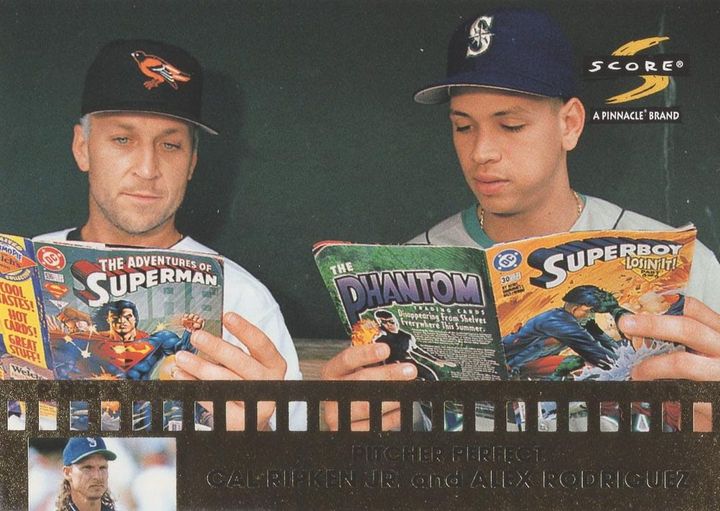
The Mariners were also watching the long-awaited emergence of Alex Rodriguez. He was never a secret in baseball as the first overall pick in the 1993 draft. When Rodriguez signed with the Mariners after the draft, part of the agreement stipulated that he would make his major league debut the following season, in 1994, and he was guaranteed major league time each year. 12 He was called up from AA Jacksonville and debuted in July 1994 just before his 19th birthday. As the player’s strike loomed, he was sent down to AAA Calgary in August. 1995 was spent bouncing between the Mariners new AAA affiliate in Tacoma and Seattle. 1996 was the year he wanted to stick in the major leagues. No more minor league life for him.
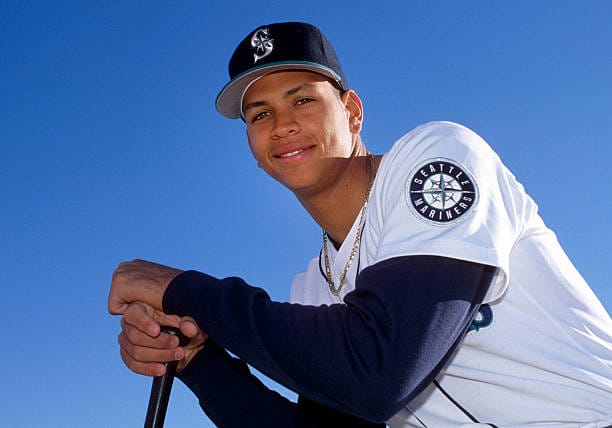
The Mariners obviously had high hopes, but tried to keep the pressure off of him by batting him ninth. Right away, he began making a case to move up in the lineup. Despite his potential, he remained outwardly humble. After hitting his first career grand slam, one of the youngest players to ever hit one, he said to reporters, bashfully, “I’m not supposed to do that, I’m a ninth hitter.” 13
The writers who covered the Mariners were impressed with Rodriguez and filled many column inches gushing about his maturity and his work ethic. His prowess was also recognized across baseball. In mid-April, Baseball America released their rankings of the Top 25 Major League Players 25 and Under. Rodriguez ranked number four, behind Chipper Jones, Raul Mondesi, and Manny Ramirez. It was clear he was moving up in the lineup. Unfortunately, on April 21st he left the game with a hamstring injury. The Mariners were not going to mess around with the hammy of their prized shortstop, so onto the disabled list he went. Luckily, it was a short stint and he returned in early May.
Dan Wilson left the first game of the Angels series in the fourth inning with a sore ankle after fouling a pitch off of it, but he played in the second game and quelled any injury worries by hitting his first career grand slam. Not only that, but the slam tied him with Griffey in home runs, and he led the Mariners and was second in the American League with 15 RBI.
"I'm not doing anything magical," said Wilson, who had just received a fresh shaving cream pie in the face. "It's just happening for me right now. It's kind of unexplainable."14 The News Tribune went so far as to suggest that he was “making up for the power lost by the trades of Tino Martinez and Mike Blowers.”15 His power surge was so out of character, everyone searched for an explanation. He had been lifting weights in the offseason and continued into the season. He’d been working with hitting coach Lee Elia. He was older and wiser at age 27.
In 1996, he would hit a career-high 18 home runs and drive in 83 runs, also a career high. 1996 was the year there was a power surge across baseball, with talk of juiced balls and notes about players adopting weight-lifting regimens. For Wilson, it was likely the confluence of prime athleticism meeting prime baseball smarts, with a dose of help from pitching, which was down around the major leagues. Whatever the reason, 1996 was the best offensive year of Wilson’s career, and it was only just beginning.
The Blue Jays came to town after the Tigers, and after the Mariners swept them in Toronto they had been struggling and were eager for a revenge series. After dropping the first two games, Randy Johnson stepped on the mound, but yet another illness tried to fell him, this time a stomach bug. He threw up the night before his start, he threw up before the game, and threw up in the third inning. Somehow, he managed to get through five innings before succumbing, and Bob Wells and Norm Charlton pitched well enough out of the bullpen to give the Mariners the win.
Bobby Ayala, on the other hand, was riding the struggle bus. In his appearance during the final game of the homestand, he was booed by the Kingdome crowd when he was called in from the bullpen. Although Edwin Hurtado and Tim Davis, appearing before him, had put the game out of reach, it was Ayala that drew the most ire, allowing four more runs to score in the seventh inning. He went on to pitch a scoreless eighth and ninth, but it didn’t matter. He was booed again when he left the mound.
The three innings he pitched on April 22nd put him at 10.1 innings on the year. Though he was sporting a 13.06 ERA it could still be dismissed as a small sample size. But the fans, the writers, and Ayala himself weren’t inclined to give him the benefit of the doubt. He came to Seattle in the same trade that brought Dan Wilson over from Cincinnati, and after a rough 1993 season had done well in 1994, earning 18 saves. He began 1995 much the same, but hit a bad stretch midseason that prompted the Mariners to bring in Norm Charlton for bullpen help. For whatever reason, he had become the lightning rod of discontent when it came to the bullpen.
But, it was clear he was, in fact, struggling, small sample size or not. In his last five appearances, he had allowed 15 runs to score, all earned, including four home runs. Pitching coach Bobby Cuellar weighed in, saying “We’ve been trying to get him to throw sliders to right-handers, and when you’re trying to work on this, sometimes you struggle. He’s just got to find the right mix of mechanics and everything else.”16
Cuellar gave his struggling pitcher a vote of confidence. “This guy has done it before and he can do it again.”17
Still, Ayala would reach a boiling point as the Mariners left on their next road trip.
April 24 - Chicago 2, Mariners 1
Chris Bosio pitched well enough to win, but his adversary, Wilson Alvarez, had a perfect game into the fifth inning. Edgar Martinez had the game’s first hit and later scored when rookie Andy Sheets hit a two-out bases-loaded single.
The Twins and Tigers played the highest scoring game in 17 years. The Twins won, 24 to 11.
April 25 - Chicago 4, Mariners 3
The Mariners sustained their fifth loss in six games following the eight-game winning streak. Bob Wolcott seemed to lose the confidence he had found, giving up two leads as the team in general suffered from miscues and bounces that went against them.
April 26 - Mariners 6, Brewers 5
Again, Randy Johnson snapped the losing streak despite leaving the game in the fourth inning with a sore back. Edwin Hurtado struggled in relief. The Mariners offense came from behind twice to grab the win.
April 27 - Mariners 6, Brewers 5
Sterling Hitchcock was unable to retired the side in order in any inning during his start, but the Mariners rallied to win in the eighth, taking advantage of some mistakes by the Brewers. Edgar Martinez hit a triple and Norm Charlton earned his third save.
April 28 - Brewers, 16, Mariners 9
Dan Wilson hit two home runs for his second multi-homer game of the season and his career. Jay Buhner also contributed two home runs, including a grand slam. It wasn’t enough for the win as every Mariners pitcher who appeared in the game allowed at least one run.
35 people were killed in the Port Arthur Massacre in Australia, which led to major changes in Australia’s gun laws.
April 29 - PPD
The final game in Milwaukee was postponed due to rain and cold.
"Rent" premiered on Broadway.
April 30 - Mariners 8, Texas 0
Chris Bosio started and felt good about his knees. Mariners pitchers didn’t allow a run and the Mariners swatted 19 hits to wrap up the most successful April in team history.
President Bill Clinton opened up the Strategic Petroleum Reserve when gas prices in the US hit the highest they’d been in 5 years.
May 1 - Texas 5, Mariners 4
Randy Johnson left the game in the second inning with a tight right calf. Dan Wilson drove in two runs with a bases-loaded double and Edgar Martinez hit his sixth home run. Will Clark hit the game-winning home run for Texas off Mike Jackson in the seventh inning.
The Mariners went back on the road to the cold of the Midwest in Chicago and Milwaukee before going to Texas to close out April. They landed in Chicago on an off-day and Bobby Ayala got the road trip off to dramatic start.
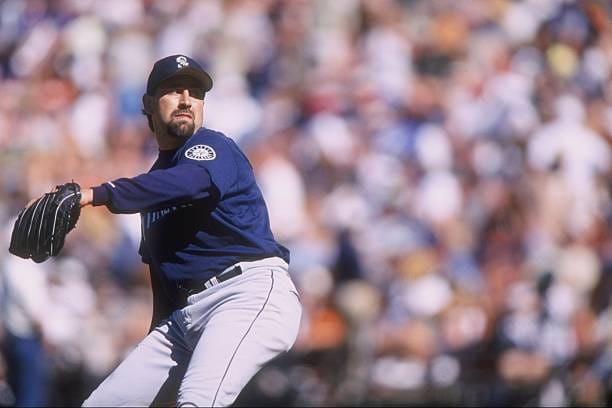
There is no definitive account of what happened. We do know that in the early morning of April 24th, Ayala suffered several cuts to his right pitching hand and wrist, and a window was broken in his hotel room. He received nine stitches at a local hospital, talked to Mariners coaches and personnel, and was placed on the 15-day DL and sent home to Seattle.
As a veteran player, he did not have a roommate on the road and no one witnessed the incident. The official statement from the club said he was injured in an incident that occurred “off the field.” General Manager Woody Woodward said of his conversation with Ayala, “I don’t want to get into what he said. I’m not comfortable saying anything beyond that.”18
The Mariners continued to refuse comment over the coming days as the media circus around incident kept spinning. News broke a few days later that Ayala had been arrested in Phoenix during spring training for a DUI after a car accident in which the other driver was also arrested. The Mariners said the team handled it internally and Ayala met with the team’s Phoenix-based psychologist after the arrest.
In the absence of an explanation about what exactly happened, rumors swirled. Reporters said anonymous players in the clubhouse reported the Ayala had been out drinking and punched the window in frustration.
It was open season for columnists to pour their opinions into newsprint and indulge in rumor mongering, and the typically tame Mariners press corps took advantage. Laura Vescey, in the Seattle P-I, compared Ayala’s struggles with Albert Belle, citing Belle’s recent behavior, throwing a ball at a photographer and cursing out a tv reporter. 19 Considering the breadth of Belle’s troubles, it was a sensationalist overreach.
Terry Mosher, in the Kitsap Sun, began sympathetically by urging fans to stop booing Ayala. Then, he leaned into hearsay to make his case:
“There have been rumors of excessive drinking. There may be more. But nobody wants to talk about it. Not the Mariners. Not Ayala.
There is a reason why Ayala punched out a hotel window early one morning and cut his hand, necessitating a tour on the disabled list. Have you ever tried to punch out a hotel window? It’s almost impossible.
We can only guess that any demons he may have been battling led him to the window.
The rumor is in he’s in a substance abuse clinic. But we don’t know that.”20
That sort of speculation feels wildly irresponsible because the truth was—and is—the beat reporters and columnists did not know what happened. At best, Ayala was going through a rough period in his life and made some poor decisions. At worse, perhaps he was struggling with alcohol use and needed intensive help. Whatever the case may have been, Ayala did not have any further known arrests or off-field problems.
The Mariners continued to stay quiet on each of the incidents involving Ayala. As for himself, Ayala stopped speaking to the media from that point forward.
In all, he missed two months of the season, returning at the end of June.
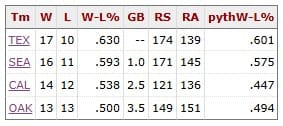
Overall, the Mariners were off to their best start in franchise history. They finished April with a record of 16-10 tied for first with Texas in the American League West (they’d fall one game behind after the final game in Texas). Furthermore, despite the worries about the heart of the order, the Mariners set a major league record with 44 team home runs in the month of April. You could hardly expect better results. But success meant the bar was raised higher, and trade rumors swirled around the team as the month came to a close. Before his injury, Ayala was the subject of three-team trade rumors with the Cubs and Reds. The Mariners still needed an experienced outfield who could hit. They needed back end starters. They needed help in the bullpen.
It was a huge boost to the starting rotation to get Chris Bosio back. He rejoined the team and made his first start during the road trip in Toronto and won three of his four April starts. The only loss came in the 2-1 loss to Chicago, a game he pitched well enough to win. At 33 years old, he had experience, exactly the type of veteran pitcher that Lou Piniella heralded. After his April 30th start in Texas, he said he was feeling great about his knees, the source of his problems and DL stint to begin the season.
The Mariners were 14-2 in games started by Randy Johnson, Sterling Hitchcock, and Chris Bosio. They were 2-8 with any other starter. The back end of the rotation was constantly in flux as Piniella tried to solve an unsolvable puzzle and ride the hot arms. Menhart was moved in and out of the rotation and up and down between Tacoma and Seattle. Likewise with Edwin Hurtado. Rafaela Carmona and Tim Davis were called up and sent down to Tacoma several times to help the bullpen and fill in a gap when a guy was moved into the starting rotation. Names like Scott Davison and Joe Klink and Bob Milacki were constantly bandied around as solutions.
The pitching situation got murkier as the month progressed and the little ticky tacky issues Randy Johnson faced began to snowball. He’d had the flu, a stomach bug, and a new baby. Then, he left the game in Milwaukee with a sore back. The plan was originally to push back his start to give him time to rest and not push his back, but he told Piniella he was feeling good and wanted to stay on his regular schedule.
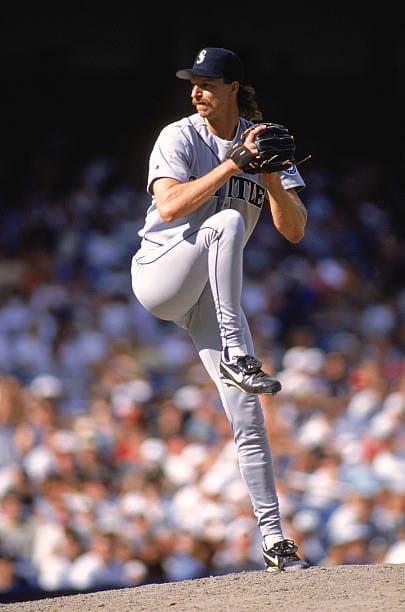
This was a mistake. To kick off the month of May, he left the game in the second inning with a tight calf muscle. After the game, he was apoplectic. “I’m very frustrated. I don’t know what’s wrong or how I did it. My calf cramped, my hamstring is bothering me and so is my back. I don’t want to talk right now.”21
Ken Griffey Jr. was also dealing with a mysterious ailment. He was having dizzy spells and losing weight, which was concerning to him and the Mariners, and still struggling at the plate.
In May, the Mariners were scheduled to play play most of their games against teams that were contending in their divisions. With the worries about Randy Johnson and Ken Griffey Jr., May was shaping up to be a test.
 Amanda Lane Cumming
Notes
- LaRue, Larry. "Mariners Ride Hitchcock - Yankee Refugee 2-Hits Brewers" The News Tribune, April 8, 1996: C1.
- LaRue, Larry. "Sorrento Rips Brewers, Johnson Records 100th Career Victory." The News Tribune, April 7, 1996: C1.
- LaRue, Larry. "Sorrento Rips Brewers, Johnson Records 100th Career Victory." The News Tribune, April 7, 1996: C1.
- LaRue, Larry. "Sorrento Rips Brewers, Johnson Records 100th Career Victory." The News Tribune, April 7, 1996: C1.
- Allen, Percy. "Griffey sent home with flu; he'll make road trip." The Seattle Times, April 8, 1996: C4.
- Street, Jim. "Flu-Stricken Charlton Off His Sick Bed" Seattle Post-Intelligencer, April 16, 1996: D4.
- Street, Jim. "Piniella Gives Hurlers 'Throw Strikes' Talk." Seattle Post-Intelligencer, April 12, 1996: E6.
- Street, Jim. "Fermin Exit Grows Near" Seattle Post-Intelligencer, April 11, 1996: C8.
- "Mariner Log - Bosio Eager For Start Today Against Toronto." The Seattle Times, April 13, 1996: B4. Others: Mike Stanley of the Yankees, Aug. 10, 1995; Ernie Whitt of Toronto, Sept. 14, 1987; and Cincinnati's Johnny Bench, May 29, 1980.
- LaRue, Larry. "M's Welcome Bosio Back with Hit Party." The News Tribune, April 14, 1996: C1.
- LaRue, Larry. "M's Welcome Bosio Back with Hit Party." The News Tribune, April 14, 1996: C1.
- Street, Jim. "Rodriguez: $1.3 Million - No. 1 Draft Pick Shuns Advice, Signing 3-Year Deal with M's. Seattle Post-Intelligencer, August 31, 1993: D1.
- Brooks, Gary. "Streak Gets Bigger, Better, Mariners Match Club REcord with 8th Straight Win." The News Tribune, April 19, 1996: C1.
- Brooks, Gary. "M's Ride Wilson Slam, Hot Catcher Drives in 5 as Streak Reaches 6." The News Tribune, April 17, 1996: D1.
- Brooks, Gary. "M's Ride Wilson Slam, Hot Catcher Drives in 5 as Streak Reaches 6." The News Tribune, April 17, 1996: D1.
- Withers, Bud. "M's Streak Ends at Eight - Carter's Big Pills - Pair of Two-Run Homers Life Jays." Seattle Post-Intelligencer, April 20, 1996: D1.
- Withers, Bud. "M's Streak Ends at Eight - Carter's Big Pills - Pair of Two-Run Homers Life Jays." Seattle Post-Intelligencer, April 20, 1996: D1.
- Finnigan, Bob. "Punch Puts M's Ayala in Stitches, Players Say Pitcher Put Hand Through Window." The Seattle Times, April 25, 1996: C1.
- Vecsey, Laura. "Ayala Might Need More Help Than Pitching." Seattle Post-Intelligencer, April 26, 1996: E1.
- Mosher, Terry. "It's time to stop booing Bobby Ayala." Kitsap Sun, May 11, 1996, D1.
- Street, Jim. "M's Lost Johnson, and Game - Ailing Lefty Last Just Two Innings." Seattle Post-Intelligencer, May 2, 1996: D1.
Comments ()